Product merchandising is a group of activities used to promote and sell products in your store. Read this post for some product merchandising inspiration and real-world examples of stores that do it successfully.
Product merchandising is a group of activities used to promote and sell products in your store.
These activities range from visual merchandising and product display to special offers and pricing. The ultimate goal of product merchandising is to get customers to come into your store and make a purchase, but also to have an enjoyable experience and visit your store again.
Successful product merchandising allows you to get the right products in front of the right customers. By doing this, you’ll order and sell the correct amount of inventory, drive profits, and make your products (and your store) memorable.
What is product merchandising?
Product merchandising is the practice of intentionally promoting, displaying, and selling of the products in your store.
A big part of this is visual merchandising the process of creating a planogram, designing, and displaying products to highlight their features and benefits. The colours, lighting, product positioning, and store layout all play an important role in product promotion.
Product merchandising also includes experiential elements, like getting your store visitors to interact with products, try sample products, take photos, or sit down to take a break.
Promotions and product bundling are also part of product merchandising efforts—as is email marketing, social media, and any other digital marketing strategies you use.
Why retailers use product merchandising
1. Brand building and recognition
When customers visit your store or look at your products online, they interact with shapes, colors, the order of products, and many other visuals. For brick-and-mortar shoppers, there are also scents, sounds, and tactile senses at play.
They all play a role at how your customers will perceive and remember your brand. Your brand’s perception is often a result of more than people can grasp on a conscious level. It’s subtle and powerful.
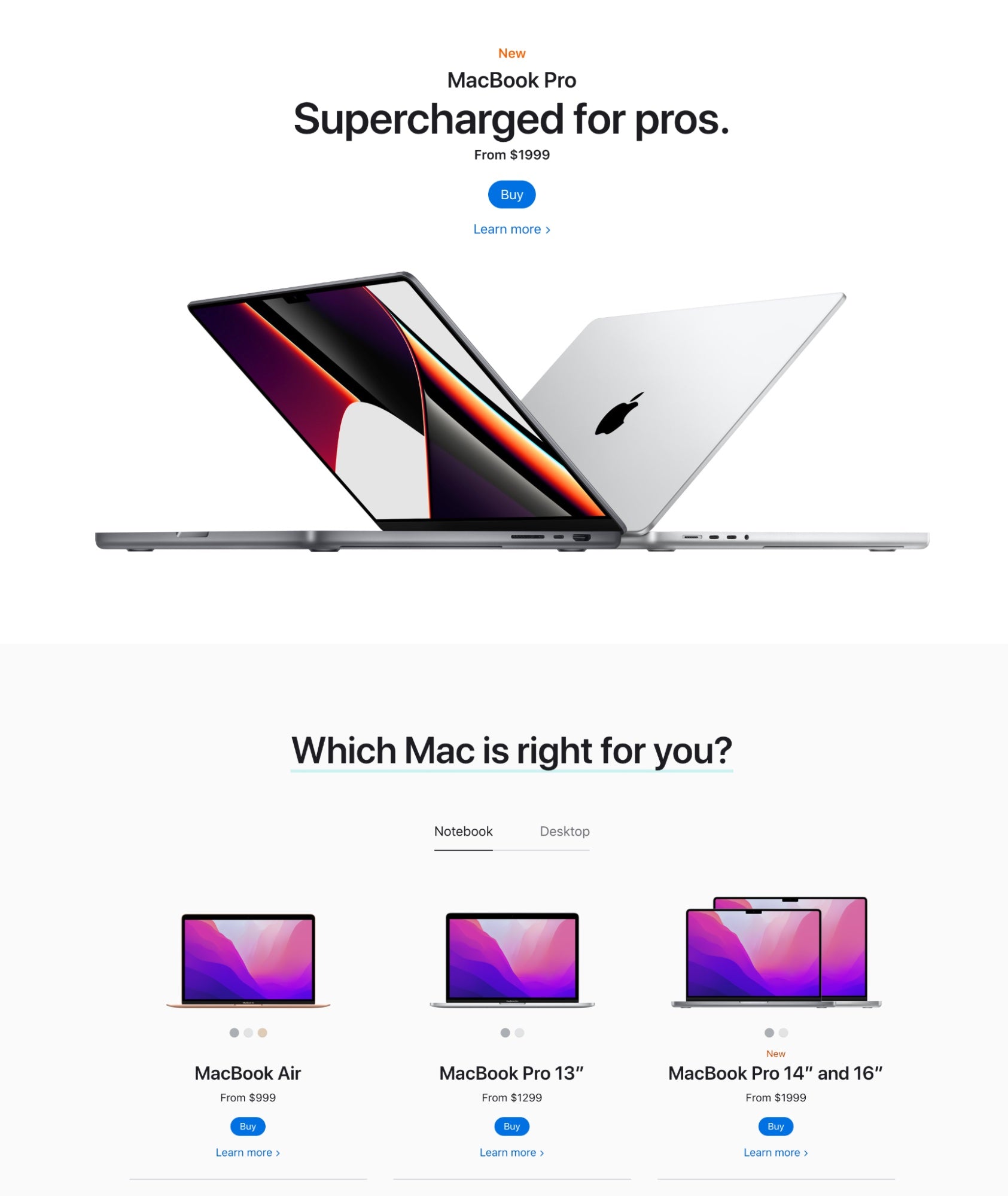
For example, Apple is well known for its simple, minimalist store design with lots of white space. This creates a sense of luxury and focus.

This bright, sleek look and feel translates to its online store as well, which features very few colors, short lines of copy, and plenty of space between different elements.
Another example is Lush, a fresh handmade cosmetics brand. If you’ve ever been to a Lush store, you can likely vividly remember what it smelled like. You can also walk through a mall and smell a Lush store nearby, even if you don’t see one.
And once you’re in, you can see hundreds of packaging-free products you can touch, smell, and try a sample of. Lush is famous for its colorful, fragrant in-store experience.

2. Increased sales
Product merchandising emphasizes the best features and benefits of your products and leads to more sales, as well as larger purchases through upselling and cross-selling.
For example, you promote a new hair care line by giving out travel-size samples. The customer doesn’t need a new hair conditioner now, but tries it out once their current bottle runs out. They like it and choose to purchase it the next time they’re in the store.
This is how they discover hair stylers and tools they were looking for, so they buy them and grab samples of other products from the line—and the cycle continues.
Product promotion through samples, positioning, and grouping complementary products encouraged the customer not just to make a larger purchase, but to keep returning to the store as well.
3. Excellent customer experience
The best thing you can do for your customers is to get them to feel good from the moment they enter your store until they leave (and beyond).
Their experience will depend on more than just product merchandising, including interactions with sales associates and payment options they can choose from.
But your products play an essential role. Was the customer able to find what they were looking for? Could they easily make sure they’re buying the right product for their needs? Did the store layout and signage make it easy to navigate options? Would they tell a friend to visit your store to buy that product?
Product merchandising aims to meet the customer with the best product at the right time. In turn, you’ll create loyal, returning customers and brand ambassadors.
4. Improved inventory turnover
Holding excess inventory is expensive. Holding the right amount of the products your customers want, however, improves cash flow, maximizes your storage space, and avoids unsellable inventory (products you can no longer sell because they’re out of season or style).
This is why product merchandising is key. Instead of passively holding stock and hoping customers find their way to it, you can consider different seasons, customer needs, historic product demand, and upcoming trends to intentionally manage your inventory and promote the right products at the right time.
Your inventory impacts sales (by dictating how much you can sell) and expenses (by dictating what you have to buy), so it’s worth focusing on product merchandising for maximum sales and cash flow—and minimal risk.
Product merchandising tips
Consider customers first
Your products need to speak to your customers, from your product range to how you name, describe, position, and promote each of your items.
This isn’t just about a customer’s need for a product but also their shopping style and how they make decisions.
For example, people go to IKEA to buy furniture and home accessories, but customers’ needs aren’t that simple. If they were, IKEA would be nothing more than a basic showroom displaying popular pieces of furniture with a checkout at the end.
Instead, IKEA gives its customers the chance to plan and visualize layouts using their products. They can walk through sample bedrooms, kitchens, living rooms, hallways, and patios to get inspired to implement a solution into their own home.

IKEA takes this to the next level with fully equipped and decorated apartment examples, often emphasizing its spaciousness and organisation despite a small square footage.

Consider what your customers need and want as they walk into your store.
How likely are they to have the exact product in mind? What information and visual cues do they need to make the best decision? How can you emphasize key details and benefits of products in your store with those needs in mind?
Optimize store layout
Your store layout plays another key role. To improve your store layout, consider your products, the consumer behavior you want to encourage, and your store’s square footage.
Some store layout options include:
- Grid: a pattern of long isles, typically seen in grocery stores and pharmacies, with staple items at the back
- Loop: a predefined path a customer walks through, as seen in IKEA
- Free flow: no defined pattern, great for small spaces and stores with less merchandise
- Boutique: common type of a free-flow layout that groups products by brand, category, or complementary items
Check out all 10 store layout options to create one that helps you achieve your product merchandising goals. Do you want customers to slow down and browse? See complementary products together? Consider more versions of the same product?
This effort will lead the right customers to the best products for their needs, and in a way they prefer.
Leverage a variety of display types
Product displays can help you draw customer’s attention to specific products and emphasize relevant features of a product.
For example, you can display clothing on mannequins, garment racks, and display tables. Smaller accessories like bags, jewelry, and fragrances look great on freestanding displays, display cases, and glorifiers.

The idea is to create an engaging, visually pleasing combination of product display types to get customers into the right mood and frame of mind as they browse your store.
Pay attention to how your customers move through the store and interact with different products, and the way they’re displayed, so you can understand what works and what doesn’t. You can tweak product displays and experiment with any of the 19 popular retail product displays for maximum results.
5 product display and visual merchandising ideas
1. Turn your products into art
Have you ever stepped into a store where the products were also the artwork? It’s quirky and memorable. And while it may not always be functional, it can be a new way to position your products and emphasize what makes them special.
The striking art of the nose makes passersby stop and take a closer look—and discover the perfumes beneath the nose. It’s art and product in one, a great balance between tasteful and effective in attracting customers.
“In [retailers’] ability to create an artful piece, they’re also showcasing that this is an important piece for the customer to have. It’s an artful version of a spotlight and I love it,” adds Guillot.
2. Create a full body experience
One of the most unexpected store and product layouts might be Victor Churchil, a retail butcher shop on High Street in Melbourne, Australia.

Every aspect of the interior, an exclusive selection of products, and an elegant service make this a unique, attention-grabbing butcher shop. Its dramatic lighting, dark hues, curves, and marble floors are more reminiscent of a high-end fashion brand.
“We also love that the Melbourne store is a full-body experience. Not a single screen in sight. Instead, the guests are inhaling the scents, admiring the displays, watching the demonstrations, tasting the samples, chatting with each other and with the team members. They are participating, engaging, and enjoying,” states a report by The Cool Hunter.
Whatever products you sell, you can create an immersive experience that draws store visitors into your world.
3. Take advantage of technology
There are many possibilities when it comes to technology—you just have to find the right way that works for you.
Big tech retailers like Apple and Verizon do this because technology is at the core of their products. But it can work for other industries, too.
Eslite Bookstore uses digital screens to help find where a specific book is located in the store and view video promotions.

And Harvey Nichols, a British department store, uses large-scale touchscreens to show customers videos of collaborations and product information. Customers can also add products to a basket for checkout.

4. Use flower power
There’s scientific proof behind the benefits of fresh flowers—they’ve been found to make people feel comfortable, relaxed, and natural. And what retailer wouldn’t want an easy-going, happy customer in their store?
Macy’s caught on to this more than 70 years ago with its annual Macy’s Flower Show. It’s a two week exhibition that attracts around half a million people to participating stores.

There’s a reason we give flowers as gifts to the special people in our lives. Most retailers don’t offer such a large, artful display because it isn’t feasible for the space and budget they have, but that doesn’t mean you can’t add flowers to your store.
Place fresh flowers outside your storefront to greet customers, and sprinkle them throughout your store and near the cash registers. Look for ways to thoughtfully integrate them with your product—maybe you use a pitcher as a vase, or you could create fresh flower headpieces for your mannequins.

5. Create upcycled product displays
You can opt for a less traditional way than stands, racks, and display cases to put your products on show.

The Trina Turk Boutique did that with old logs. Instead of displaying her fashion apparel and accessories on standard product stands, it took a rustic, creative approach with trees.
It adds a different visual appeal and speaks to your brand identity when you use outside-the-box product displays. And if you upcycle in a smart way, it can also save you some serious room in your budget.