
Welcome to the cutting edge of retail strategy where intuition is replaced by insight. Neuro Merchandising represents the definitive fusion of consumer psychology and biometric data, creating a powerful framework for understanding true customer behavior. This 2025 guide will explore how this advanced discipline moves beyond traditional surveys and sales data to tap directly into the subconscious drivers of purchase decisions.
This approach utilizes technologies like eye-tracking, facial expression analysis, and electroencephalography to measure genuine, non-conscious consumer responses. By analyzing where attention goes, what triggers emotional engagement, or which stimuli cause stress, brands can decode the silent conversation between product and purchaser. Paired with established principles of consumer psychology, such as cognitive fluency and choice architecture, this data provides a complete blueprint for optimizing every customer touchpoint.
The result is a monumental shift from guessing to knowing. Implementing neuro merchandising strategies allows for the creation of retail environments, product packaging, and digital experiences that are scientifically engineered to resonate. As we advance through 2025, this knowledge translates into a significant competitive advantage, fostering deeper brand connection, minimizing decision friction, and ultimately driving a measurable increase in conversion and loyalty. Prepare to transform your approach and unlock unprecedented commercial potential.
The Science Behind the Strategy: Core Principles of Neuro-Merchandising
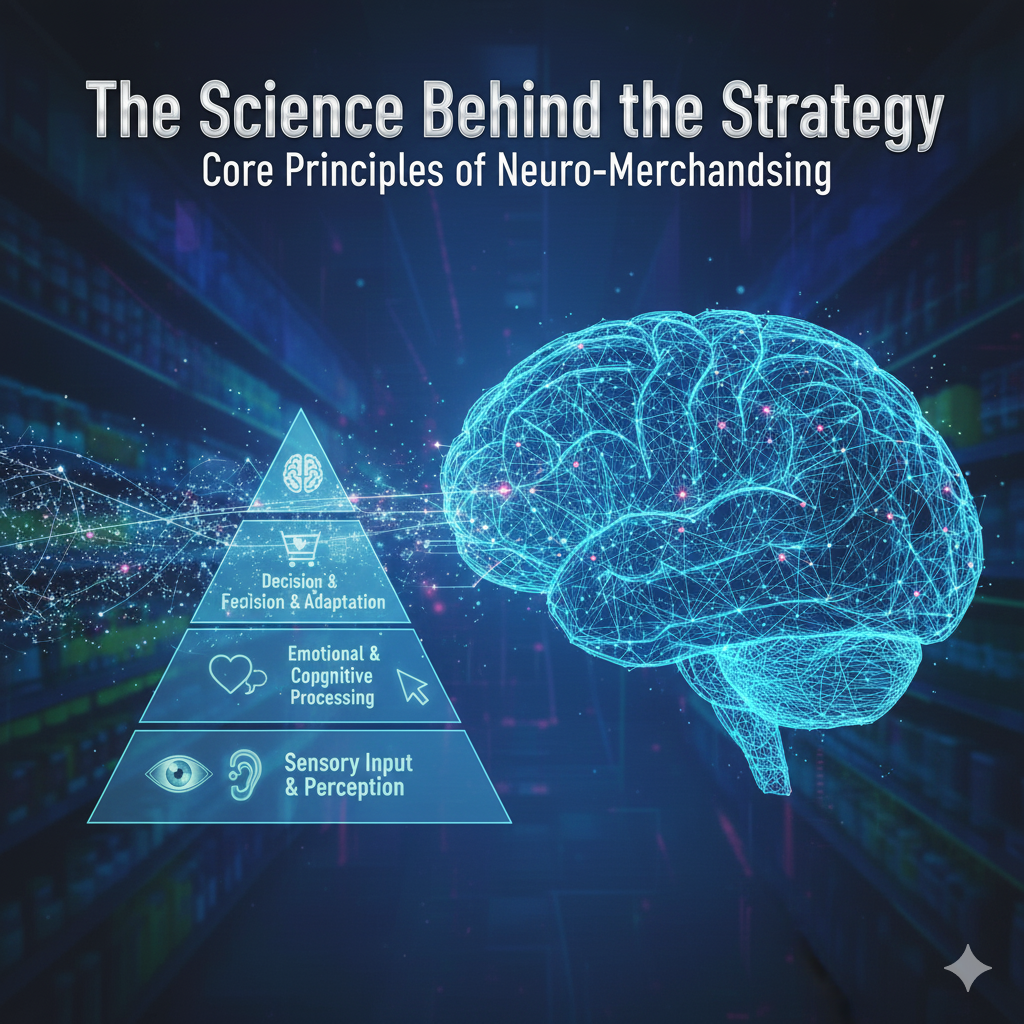
Neuro-merchandising is founded on a fundamental shift in perspective, moving beyond what consumers say to understand what they truly feel and how their brains unconsciously react. Traditional retail has long relied on explicit feedback through surveys and focus groups, but these methods are limited by what participants can consciously articulate and are often skewed by social desirability bias. Neuro-merchandising bypasses these limitations by focusing on the subconscious, non-conscious, and automatic brain processes that are the primary drivers of most purchasing decisions. This scientific approach acknowledges that up to ninety-five percent of decision-making occurs in the subconscious mind, making it the most critical area for retail strategy. By studying these underlying processes, businesses gain access to the authentic drivers of behavior that consumers themselves may not fully understand.
The first core principle is that emotional response precedes and often outweighs rational justification in a purchase decision. Neuroscience confirms that emotional brain systems, particularly those involving reward and aversion, are activated long before the cognitive, reasoning parts of the brain engage. Neuro-merchandising uses biometric tools like facial expression analysis and galvanic skin response to measure these immediate, visceral reactions to a product, package, or store layout. A positive emotional signature, such as a subtle smile or increased arousal, indicates an approach motivation, while a negative or stressed response signals avoidance. The strategic goal is therefore to design experiences that consistently trigger positive emotional valence, creating a sense of reward and safety that makes the subsequent rational purchase feel like a natural conclusion.
A second essential principle is the paramount importance of capturing and guiding attention. In an environment of constant stimulation, the brain operates as a filter, and whatever fails to gain attention has zero chance of being purchased. This is where technologies like eye-tracking become invaluable, providing a direct map of visual attention. Heatmaps reveal not just what is seen, but for how long and in what sequence, identifying true points of focus versus areas of perceptual blindness. The science of attentional capture involves understanding contrast, novelty, and placement to ensure key products or messages break through the clutter. This principle dictates everything from shelf positioning and signage to website hero images, all engineered to align with natural human gaze patterns and cognitive processing.
The third principle centers on reducing cognitive load and facilitating effortless processing, a concept known as cognitive fluency. The brain inherently prefers information that is easy to process, interpreting this ease as a signal of familiarity, safety, and truth. Neuro-merchandising applies this by simplifying choices, using clear and intuitive signage, employing familiar and pleasing visual patterns, and creating logical, navigable store flows. When a retail environment or product presentation is cognitively fluent, it minimizes mental effort and the associated negative emotion of frustration. This reduction in friction makes the shopping experience feel more pleasant and intuitive, directly lowering the subconscious barriers to purchase and increasing the likelihood of conversion.
Finally, the integrative principle of neuro-merchandising is its predictive power and ethical application. By combining the data streams of emotion, attention, and cognitive effort, brands can build highly accurate models of consumer behavior that predict real-world sales outcomes more reliably than traditional methods. This moves strategy from retrospective analysis to prospective optimization. However, this powerful capability is grounded in a necessary ethical framework. Responsible neuro-merchandising is not about manipulation but about respectful facilitation, using science to remove friction and enhance satisfaction in a transparent manner. It is the application of these core principles with integrity that transforms a blunt sales tool into a sophisticated system for building deeper, more resonant connections between brands and consumers.
Decoding the Subconscious: Key Biometric Technologies in 2025
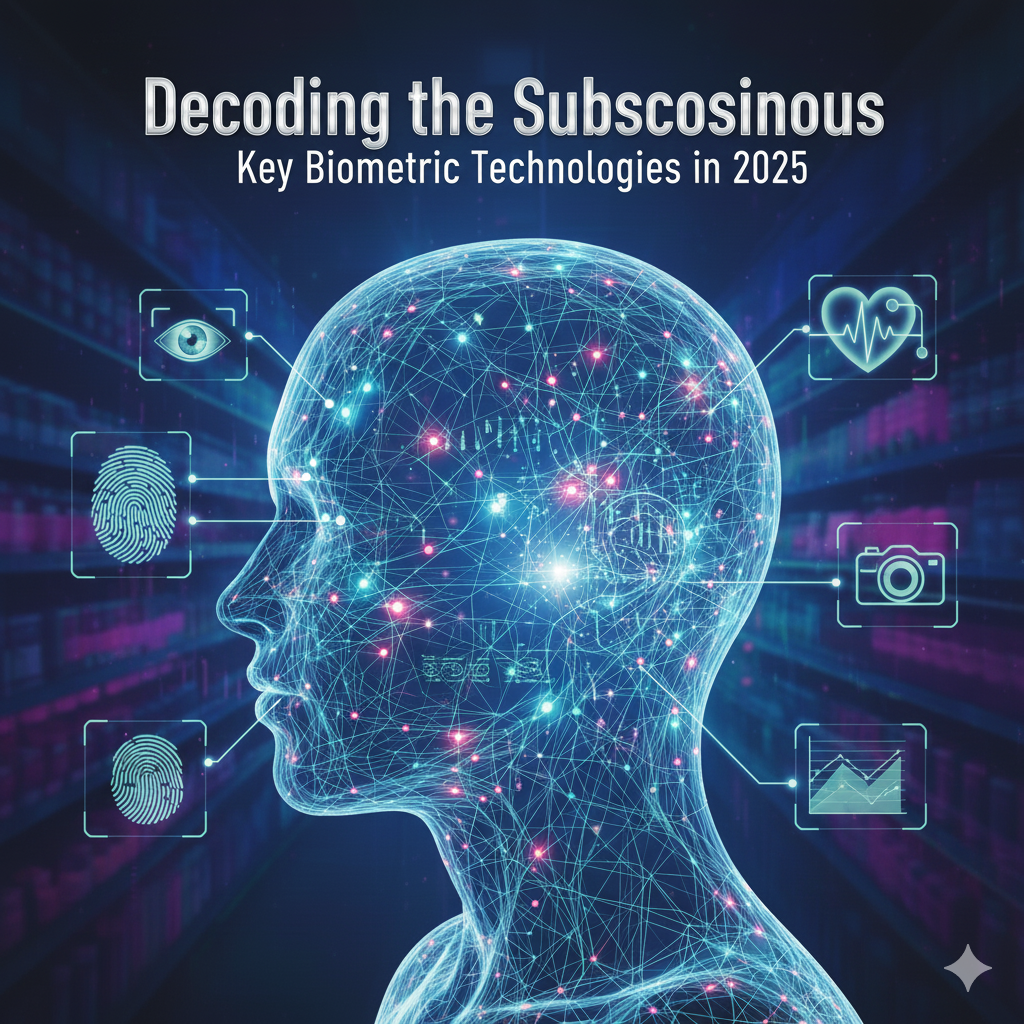
The exploration of the subconscious consumer mind in 2025 is powered by a suite of sophisticated, yet increasingly accessible, biometric technologies. These tools move far beyond traditional metrics, capturing raw, unfiltered psychophysiological responses that reveal the true story behind consumer attention, emotion, and engagement. The modern toolkit is defined by its portability, integration, and the application of advanced artificial intelligence to interpret complex biological data, providing a multi-layered understanding of non-conscious reactions.
Eye tracking technology has evolved from clunky headgear to discreet, high-resolution cameras embedded in screens or retail shelves. These systems no longer just show where a person looks; they map the entire journey of visual attention with remarkable precision. Analysts can now determine the exact sequence of gaze points, the duration of fixation on specific design elements or products, and even the pupil dilation response, which is a key indicator of cognitive load and emotional arousal. This allows retailers to definitively answer critical questions about package design, website layout, and in-store signage, identifying precisely which elements capture attention, cause confusion, or are completely ignored, enabling data-driven optimizations that guide the visual journey toward conversion.
Facial expression analysis, powered by advanced computer vision algorithms, serves as a window into immediate emotional response. This technology decodes the subtle, involuntary micro-expressions that flash across a person’s face in reaction to a stimulus, often before they are even consciously aware of a feeling. By analyzing the movements of key facial muscles, the software classifies core emotional states such as joy, surprise, disgust, or confusion. In a 2025 context, this is used to gauge genuine emotional engagement with an advertisement, the unspoken delight or disappointment upon trying a product, or the frustration level when navigating a checkout process, providing an authentic emotional valence score for every experience.
To measure deeper cognitive engagement and arousal, technologies like electroencephalography and galvanic skin response are employed. Modern EEG systems utilize lightweight, wearable headbands that measure electrical activity in the brain, identifying patterns associated with focused attention, cognitive workload, and approach or withdrawal motivation. Concurrently, GSR sensors, often embedded in a wristband, measure subtle changes in the skin’s electrical conductivity caused by sweat production, which is directly tied to autonomic nervous system arousal, signaling excitement, stress, or intensity of emotional response. Together, these tools reveal the cognitive effort and emotional intensity behind the more surface-level data of where someone is looking or their fleeting facial expressions.
The true power of these technologies in 2025 lies not in their isolated use, but in their integration within a unified neurometrics platform. The most advanced systems synchronize data streams from eye tracking, facial coding, EEG, and GSR in real time, creating a holistic biometric profile of a consumer’s experience. Artificial intelligence and machine learning models are then used to parse these complex, multi-modal datasets, identifying patterns and correlations that would be impossible for a human analyst to discern. This integrated approach allows researchers to understand, for example, how a specific visual element captured attention, triggered a positive emotional expression, and simultaneously increased cognitive engagement, providing a complete and scientifically robust picture of subconscious impact to inform decisive strategic actions.
Conclusion
Neuro-merchandising represents a fundamental transformation in how businesses understand and interact with their customers, moving the entire industry from a model based on assumptions and reported data to one grounded in scientific evidence of subconscious behavior. By strategically fusing the timeless principles of consumer psychology with the precise, real-time data from modern biometrics, brands now possess an unprecedented toolkit. This toolkit allows for the design of retail environments, products, and marketing that do not merely guess at what might work but are engineered to resonate on a deeper, psychological level. The ultimate outcome is a more seamless, engaging, and intuitively satisfying journey for the consumer, which naturally translates into stronger brand loyalty and improved commercial performance.
This powerful approach, however, carries with it a significant responsibility for ethical application. The ability to decode subconscious impulses is not a license for manipulation but a call for greater transparency and respect in consumer relationships. The most forward-thinking companies in 2025 will distinguish themselves by using these insights to reduce friction, alleviate decision fatigue, and create genuine value, rather than to exploit cognitive biases. Building trust is paramount, and this involves a commitment to data privacy, clear communication, and using neurometric findings to enhance the human experience of shopping, not to diminish consumer autonomy.
Looking ahead, the journey of neuro-merchandising is one of continuous evolution. The technologies and methodologies discussed here will become more refined, accessible, and integrated into standard business intelligence platforms. The competitive edge will increasingly belong to those who can effectively translate this rich biological and psychological data into actionable, humane, and customer-centric strategies. Embracing this scientific approach is no longer a futuristic concept but a present-day imperative for any brand aiming to thrive in an attentive and dynamic marketplace, where understanding the unspoken needs of the consumer is the ultimate key to connection and growth.
Frequently Asked Questions
1. What is the primary goal of neuro-merchandising, and how is it different from traditional marketing research?
The primary goal of neuro-merchandising is to understand and optimize the subconscious drivers of consumer behavior to create more effective and satisfying shopping experiences. Unlike traditional marketing research, which relies on self-reported data from surveys and focus groups, neuro-merchandising uses biometric technologies to measure involuntary, non-conscious physiological and neurological responses. This approach bypasses the rationalization and bias inherent in verbal feedback, providing objective data on true emotional engagement, attention, and cognitive effort, leading to more accurate predictions of real-world behavior.
2. What are the most common biometric tools used, and are they used on customers without their knowledge?
The most common tools include eye-tracking to measure visual attention, facial expression analysis to decode immediate emotions, and electroencephalography or galvanic skin response to assess cognitive engagement and arousal. Crucially, reputable neuro-merchandising research is always conducted with the explicit, informed consent of participants. Studies are carried out in controlled lab settings or as opt-in experiences, with clear explanations of the data being collected. Ethical practice is foundational, and the technology is not used for covert surveillance on unsuspecting shoppers in public retail spaces.
3. Is neuro-merchandising ethical, or is it a form of manipulation?
Neuro-merchandising is a tool, and its ethics are determined by its application. When used responsibly, its goal is not to manipulate but to facilitate better communication and reduce friction. The ethical application focuses on using insights to create clearer, more intuitive, and more enjoyable shopping journeys by removing unintentional points of confusion or frustration. The line is crossed when insights are used to exploit cognitive weaknesses or deliberately deceive. Best practices involve transparency, prioritizing consumer benefit, and strict adherence to data privacy regulations, ensuring the technology builds trust rather than undermines it.