
Read this tutorial to find out how to develop shop window displays that increase foot traffic and sales on any budget, as well as examples of successful displays.
With a window display, brick-and-mortar stores have only a few seconds to draw in and retain a customer. A window display is an actual ornament placed in the front window of your business with the intention of attracting clients as they pass.
A well-designed window display can captivate customers to the point where they pause, turn around, and enter your business, where floor employees can assist in closing the deal. In addition to helping you attract consumers, eye-catching window displays allow you to showcase new products, draw attention to promotions, improve your brand image, and set your store apart from the competition.
As a visual merchandising manufacturer and retail display solutions provider, VmDisplay has helped 500+ global brands transform their storefronts into powerful sales drivers. The 20 creative ideas and 11 brand examples below showcase what’s possible—and more importantly, how we can custom fabricate these props for your brand.
Store windows are more valuable than ever due to the growing competition from e-commerce. It is crucial to have a very particular vision for your audience if you want window displays to help physical merchants.
What is the key to attracting attention and increasing sales, then? That and much more will be revealed in this guide to window displays.
How to create a window display
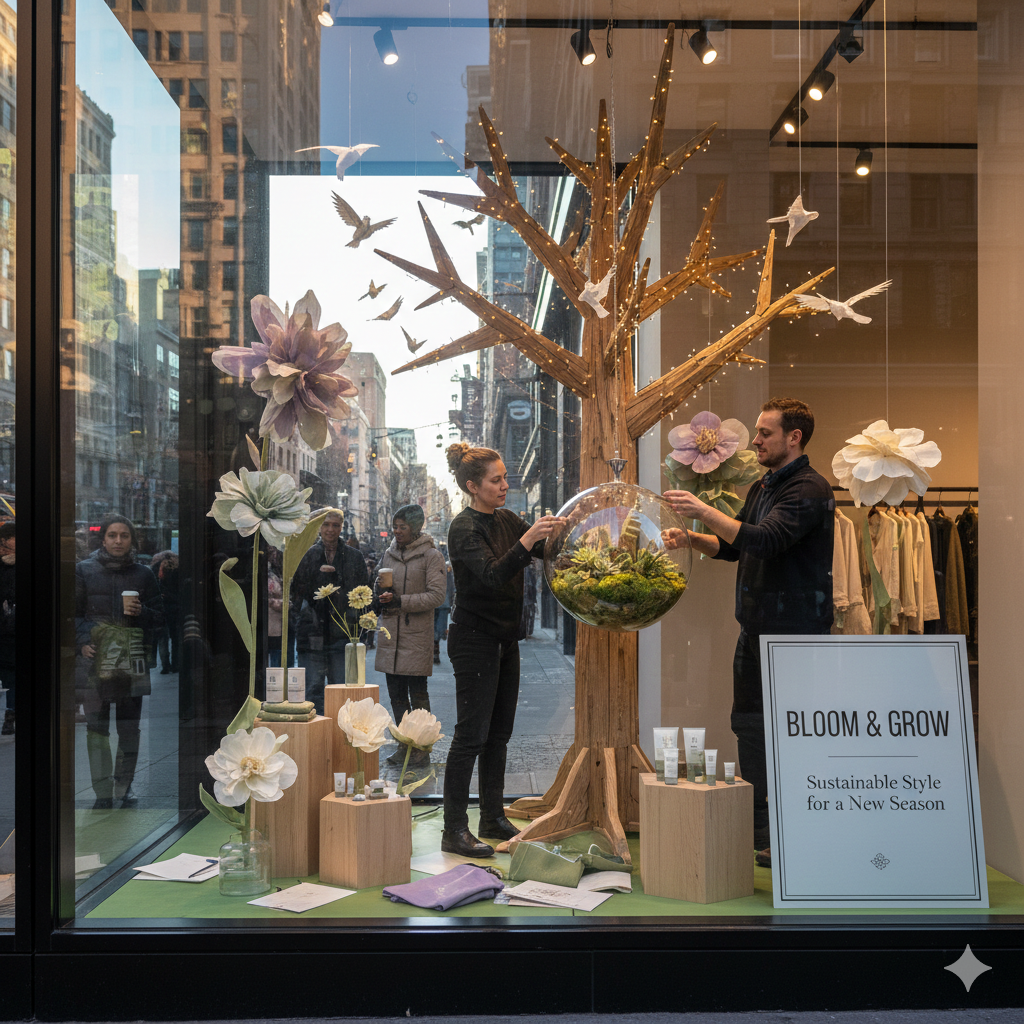
Setting up your first retail window display may sound a little daunting. Luckily, you don’t need to have a design background to create a compelling store window display. Even if you don’t have the budget to hire a visual merchandising professional, it’s possible to DIY your own display.
Here, we’ll help you set your fears aside so you can master the art of putting together unforgettable window displays. This step-by-step will guide you through the process of assembling your store window display:
1. Define your target audience
Your audience will impact the products you choose to display, the colors you use in them, and the stories you tell in your windows. Keep your ideal customer at the forefront of your strategy.
When you design your windows with a target audience in mind, you’ll draw those people in and make them excited to shop with you. If you try to create a display that appeals to everyone, you’ll end up watering down your design and appealing to no one.
2. Assemble your retail window display toolbox
Before you start brainstorming complex ideas for your first retail window display, make sure you have the necessary tools for success. In other words, you don’t want to be halfway through the process only to notice you don’t have a tape measure or another essential tool.
Here are most of the basic components you’ll need to get started:
- Tape measure
- Scissors
- Stapler
- Two-sided tape
- Hammer and nails
- Utility knife
- Glue gun and hot glue sticks
- Screwdriver and screws
- Pen, pencil, marker, and notepad
- Display Props (any non-merchandise items)
Depending on the design of your store window display, you may need other materials to complete your project. However, these tools will keep the ball rolling and can serve as a skeletal shopping list to start your display design.
3. Start with a story based on a theme
When it comes to conceptualising a store window display, it’s best to start with a pen and paper. Before sketching out your window display ideas, start with a story based on a theme. Yes, your window display design should tell at least a basic story.
It helps to begin with a theme, and then use your storytelling prowess to turn it into something more sophisticated.
For example:
- Instead of “Christmas,” think “Nutcracker”
- Instead of “Halloween,” think “Sleepy Hollow”
- Instead of “Valentine,” think “Cupid’s Mischievousness”
- Instead of “Thanksgiving,” think “Dressing Up a Turkey”
4. Create a focal point for the store window display
Once you’ve got a rough sketch, including a story based on a theme, take a moment to step out onto the street and give your window a good look.
Doing so will help you determine where your focal point should be. The focal point is where you want your prospective customers to look first and concentrate their focus. The central point of your display should be big enough to catch a shopper’s attention, even on the other side of the street.
Start thinking about the arrangement of products based on your focal point. Will you arrange your products on wires or shelves around the focal point? Or maybe set them up in a pyramid? Explore different configurations to see what would work best for your window display.
5. Add props
Props are an excellent way to think beyond conventional display solutions, especially when approached from the perspective of a prototype studio. Start by using simple, readily available materials to explore forms and concepts quickly allowing you to visualize shapes and spatial relationships before moving into physical production.
Once the design direction is set, a wide range of specialized materials can bring your vision to life. For example, fibreglass can achieve virtually any size or shape with durability and detail. Metals such as galvanized sheet, stainless steel, and copper finishes offer modern aesthetics and resilience. Acrylic delivers transparency and can be heat-bent or thermoformed into dynamic, custom curves.
Meanwhile, wood brings natural texture and a sense of warmth and high-end craftsmanship. By integrating these materials thoughtfully, you can create unique, brand-aligned props that enhance your store’s narrative and visual impact.
VmDisplay specializes in fabricating these custom display props at scale. From fiberglass sculptures to acrylic installations, our visual merchandising manufacturing services help brands bring prototype concepts to life with production-ready quality.
6. Set up your lighting
When it comes to creating an effective window display, lighting is often an afterthought or something to consider if you’ve got the budget for “extra costs.” But lighting can be a crucial component in getting people to stop and notice your display.
Lighting can create moods, highlight certain products over others, and establish a dramatic setting for your store window display. Being strategic with lighting can pay dividends by helping you get your focal point right and directing onlookers’ eyes to where you want them.
It’s not recommended to light displays directly from the top, as this can lead to unattractive, harsh shadows. Instead, consider lighting displays from the sides and front. This technique will bring out the display’s 3D quality. Plus, you can really have some fun when you have light coming at it from different angles.
7. Consider eyelines and vantage points
Grocery stores display cereals for kids on lower shelves and cereals for adults on higher shelves. This is where these customers’ eyelines land, and therefore, where their attention will be.
Keep window shoppers’ eyes in mind while building external-facing displays. If you own a children’s clothing boutique, for example, you could display products that would appeal to kids, like toys, low enough for children to see, and more practical products at parents’ eye level.
Beyond considering eyelines, it’s important to remember that you’re designing a 3D display and not a flat one. Make sure that products and props can easily be seen—and look good—from various angles.
8. Take a final look at your retail window display
Once you’ve got all the pieces where you want them, make sure to take a look at your window display from every possible angle. Very rarely is a person going to only notice a display when they’re standing right in front of it. Walk up to it from different directions and check things like your focal point, how visible your signage or calls to action are, and if it all appears balanced.
If you’re satisfied with the results, congratulations, your store window display is ready to go!
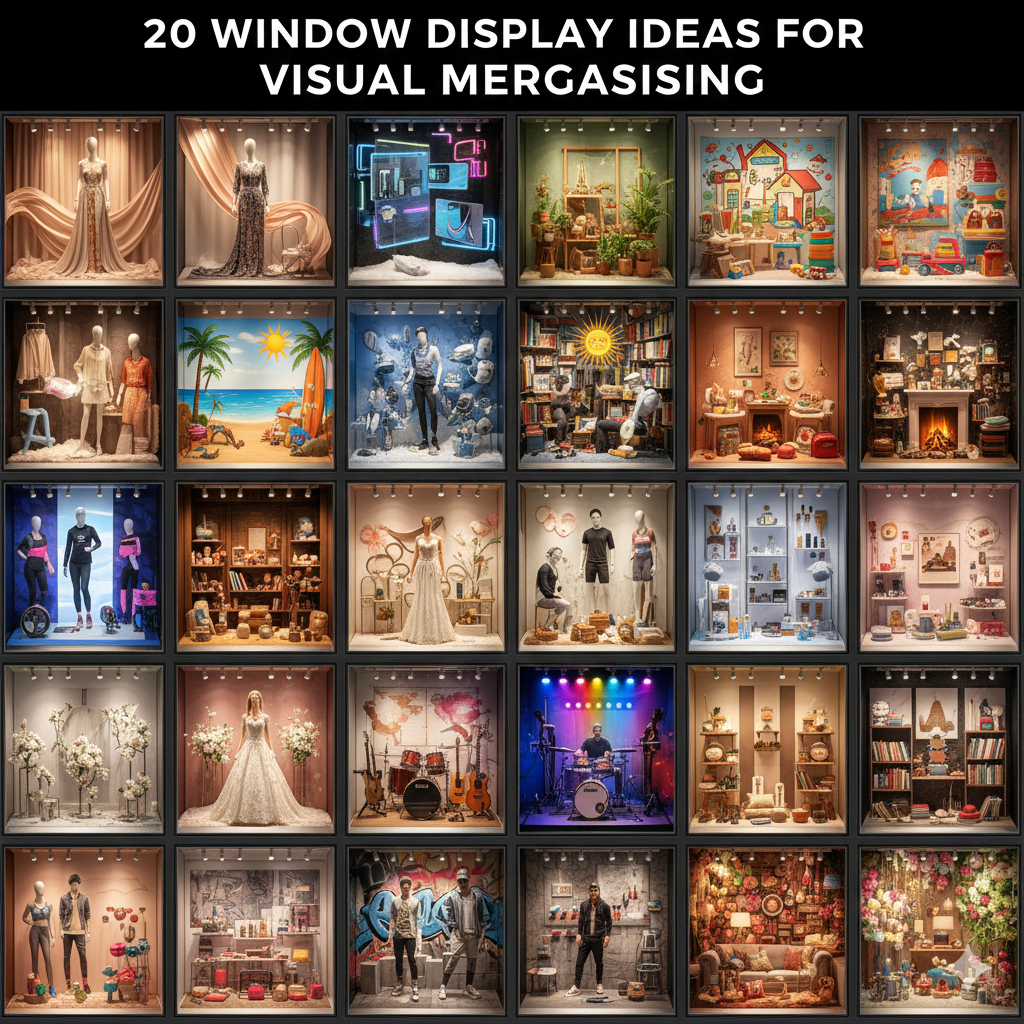
20 window display ideas for visual merchandising
1. Install a vending machine
Retail vending machines are a modern concept that allows shoppers to make purchases using self-service machines. While vending machines have mainly been used for snacks and refreshments, product-based brands have also tapped into the opportunity.
You commonly see this in airports, but there’s no reason you can’t incorporate the idea into your retail shop. This gives passersby a chance to make a purchase without even setting foot in your store.
2. Showcase your mascot
Okay, maybe your retail store doesn’t have a mascot like a professional sports team would, but if you have any sort of unique branding element, you can tap into this for a really creative window display. Take a look at ALE-HOP below—the retailer has its branded cow sticking out of a window display, sure to catch the eye of people walking through the busy city centre of Lisbon.
3. Offer collections and bundles
Use window displays to group products into themed collections. Maybe you create a display for travel essentials at the start of summer or a display with back-to-school essentials in July and August.
Primark showcased its collection of baby products in some of its window displays, as seen below.
4. Showcase the value of your products
Provide more information about your products with your window displays. Creativity in any window display is important, but for smaller retailers, products must be clearly presented, not only so passersby know what you’re selling, but to target the right buyer.
You can use your window display to educate customers, in addition to selling products. For example, you could link your QR codes to landing pages that explain the process behind how you create your products.
5. Put in a carousel
How’s this for a whimsical and fun window display idea? Freehold Raceway Mall in New Jersey has a carousel that draws shoppers, and you’ll find a non-functional but decorative carousel in many of the window displays at The Fantastic World Of Portuguese Sardines shops.
6. Dive into the season
Putting extra resources into your window display at certain times of year can really pay off. Winter holiday windows attract extra foot traffic, and, according to NRF research, holiday spending has reached an all-time high.
Design the window according to the current season (spring, summer, fall, winter) using appropriate colors, props, and products. Consider upcoming holidays like Halloween, Christmas, or Valentine’s Day and use themed decorations and products.
In the example above, Nomad Beads chose a Halloween theme to keep in with the season. In the example below, this London-based retailer hung tinsel and dressed its mannequin in a Mrs. Claus coat to celebrate the winter holiday season.
7. Go all-in on color
Color is a key component of visual merchandising and can help influence buyer behavior. If you’re looking primarily to attract customers, using red and orange in your window display will draw the attention of passersby.
Use a bold and vibrant color scheme to make your display stand out from afar. Or go for pastels and subtle hues if you want to appear approachable or make shoppers feel relaxed. Whatever it is, consider how the color makes people feel and if that’s synonymous with your retail experience.
Lacoste went all-in on the color red when it was getting ready to open one of its new locations. It actually blocked off the windows with bold red before the store was open.
8. Highlight deals and promotions
If you have any timely deals, sales, or promotions going on, use your window displays to highlight that. Even if you don’t put the promotional products on display, you can use signage or decals to draw attention that there are deals inside. This invites foot traffic to enter and explore more of what you have to offer.
9. Go interactive
An experiential window brings products to life and attracts passersby to immediately interact with your brand. “It’s always to your benefit as a retailer to create an experience,” says Joline Mujica of WindowsWear. “You want to create a moment that will show up well in an [Instagram Story], a Snap, or a video.”
Inviting buyers to download an app on the spot encourages in-store sales and future online purchases while giving you access to these engaged customers for marketing purposes. Incorporate touch screens or QR codes that allow customers to interact with the display and learn more about the products.
10. Feature real people
Use live models to showcase clothing or accessories, creating a dynamic and engaging experience. If you sell apparel or accessories, you can set up a mini fashion runway with mannequins dressed in your latest collection.
Bear in mind, that this isn’t feasible forever, but it’s a great window display idea for busy or important selling periods.
11. Showcase art
Use your window display space to showcase beautiful art. Collaborate with local artists to create a unique art piece that incorporates your products. Or commission someone to paint an inspired mural on your storefront. This also supports your local community, which will ideally inspire shoppers to support you in return.
12. Commit to a theme
Choose a theme and go for it! Maybe you use vintage props and decorations to create a nostalgic feel that highlights your products in a historical context. Or you incorporate plants, flowers, and natural elements to create a calming and inviting atmosphere.
Pop culture references could also work—incorporate characters or quotes from popular movies, TV shows, or books that are currently trending.
13. Tell a unique story
A creative window display that’s completely different from what your competitors are doing not only attracts eyeballs on the street, but also extends the reach of your content through social media sharing. Create a narrative or story that unfolds across the window, drawing customers in to see the conclusion.
14. Do less
Minimalist displays focus on a clean, simple display with a few key products to draw attention to their quality and design. While it can be tempting to fill up a window to maximize the space, cramming too many items into a display can devalue your products by making them look cluttered. Focusing only on one item communicates to passersby that it’s special.
Retailer John Lobb frequently has minimal, artistic displays that showcase its products sort of like an art gallery. The result is striking, modern, and luxury.
15. Connect with the community
Highlight local landmarks, community events, or collaborations with other local businesses. You might even promote a good cause in your window display to help boost your brand image. Also, putting something in your window that is unexpected will grab the attention of passersby.
16. Create an optical illusion
Use mirrors, lighting, and creative arrangements to create optical illusions that intrigue passersby.
17. Have fun with lights
A bright and well-lit window display is always eye-catching, especially at night. “By lighting it properly, you avoid negative shadows that can make garments look small or dowdy,” Mujica advises. Use changing lights or LED displays to create a vibrant and eye-catching window.
18. Create displays that show products in action
Show products being used in real-life scenarios, such as kitchen gadgets in a kitchen setting or camping gear in a mock campsite.
19. Showcase endorsements
If you work with influencers, celebrities, partners, or other types of endorsers, use your window displays to feature them. Maybe you print images or quotes from them, or maybe you highlight a curated collection from a featured collaborator. There are so many ways you can tap into this opportunity for your retail window displays.
20. Integrate AR technology
Retailers are increasingly using augmented reality (AR) to enhance the shopping experience and expand their brand’s reach. Use AR elements that allow customers to use their smartphones to see additional content or virtual try-ons when they view your display.
11 retail window display examples
Need some inspiration before you tackle your own window display? Here are some eye-catching examples to help stir those creative juices.
1. Gucci
For its Hallucination campaign, Gucci extended the technology to its window displays by installing classic artworks reimagined with characters dressed in designer clothing. What makes this display unusual is that most of the mannequins are facing away from the window, as if they were visiting an art gallery.
A scannable QR code on the glass breaks the fourth wall by inviting passersby to download the Gucci app and experience an animated version of the art. For Gucci, this approach was very effective at engaging younger buyers through targeted marketing.
2. Leaves of Trees
Toronto apothecary Leaves of Trees unveiled a window display featuring oversized tubes of its skin care products suspended upside down, with cascades of dried roses, grapefruit, and lavender “pouring” out.
The display is striking not only because of the scale of the props, but also because it explicitly highlights the natural ingredients the retailer uses in its products.
Leaves of Trees’ unique window displays attract a lot of walk-ins, but this wasn’t always the case. When the shop opened in 2014, its displays featured colourful florals made from paper, but none of the brand’s actual products.
Founder Roohi Quereshi soon discovered that people were stopping to look but didn’t know what she was selling. The shop was mistaken for a restaurant, a juice bar, and even a pot dispensary.
“Since we started incorporating our products into the window and aligning that branding with promotions and social media strategy, we’ve seen an increase in walk-ins from our target customer,” the founder says. “And, almost every walk-in has led to a sale.”
3. Saks Fifth Avenue x Vetements
Known for its elaborate window displays, Saks’ collaboration with French design collective Vetements did a complete about-turn by featuring nothing but a pile of old clothes.
An overt statement about sustainable retail and the rise of fast fashion, the pile was made up of donated clothes, out-of-season stock, and loose hangers. It grew bigger each day, representing excess and consumerism in fashion.
While many walking by did a double take assuming the display was a work in progress or even a mistake, it enhanced Saks’ image as a retailer with a conscience.
4. Alice + Olivia
Fashion retailer Alice + Olivia highlighted its playful side in New York by setting mannequins in front of a giant backdrop of sugary cereals and salty snacks.
The goal of this window display wasn’t so much to attract a new audience to the brand, but to tap into the nostalgia of its existing young buyers who grew up eating Frosted Flakes and Corn Pops.
To tie in the product with the display, the clothes were carefully curated to match the color grading of the boxes behind.
By combining nostalgia with bright colors, the Alice + Olivia window invokes a positive emotional experience for buyers. The overall effect is poppy, fresh, and fun.
5. Bergdorf Goodman
To woo and impress its wealthy buyers during the holiday season, luxury department store Bergdorf Goodman invests heavily in its window displays.
One of Bergdorf’s most spectacular concepts featured one million hand-glued Swarovski crystals and took nine months to build. There was a genuine crystal ball and the fortune-teller mannequin wore custom-made, one-of-a-kind couture pieces that were later sold at auction.
While Bergdorf’s resources exceed the budget of most high-street retailers, this window display makes a very strong statement about its brand and the high-end products it sells.
6. Tiffany & Co.
Tiffany & Co. has been famous for its window displays ever since the brand was immortalized in the film Breakfast at Tiffany’s. So iconic is the retailer’s window that several people have chosen the location to pop the question.
The retailer’s window displays are most notable for their simplicity. Unlike Bergdorf Goodman, whose windows are a targeted celebration of decadence, Tiffany’s creative is often quite minimal.
One window featured nothing but seven mousetraps and a mouse holding a canary yellow diamond. Set against the brand’s signature blue background, it showcased just a single item.
7. Barneys New York
Vying for attention among many other glitzy holiday windows, Barneys once chose to feature live humans instead of mannequins.
Carvers from Japan’s Okamato Studio sculpted holiday-themed blocks of ice while wearing designer jumpsuits, gloves, and scarves. The live-action demonstration set to music not only highlighted products found in-store, but also grabbed shoppers’ attention for an extended period of time.
“This window created exclusive content that people then uploaded to Snapchat and Facebook Live,” says Mujica. “Putting people in a window is risky, but by creating a one-of-a-kind experience, it created huge engagement.
8. Fendi
Taking high-value items and putting them out of context in a window display can really amplify a product.
This was the approach taken by iconic Italian fashion house Fendi when it placed expensive leather handbags inside custom vending machines at its downtown New York store. The buttons on the machines spelled “Fendi” and featured the year the company was founded.
The juxtaposition of high with low end “made the brand seem more approachable to passersby,” says Mujica. “It drew shoppers into the store like a carnival game.”
The “Fendi-ing machine” concept appeared in its stores around the world. The result? Photos were widely shared by fashion bloggers, and it helped the luxury brand appeal to a younger demographic.
9. TYPE Books
Independent bookstore TYPE has become famous in Toronto for its charming and poppy window displays.
Themes have included under the sea, typography, and an entire window dedicated to a single children’s book. Each theme is the brainchild of “craftician” Kalpna Patel, who creates much of her work using simply paper and glue.
One winter window display paid homage to hygge, the Danish word for comfort, and featured books on crafting and cooking, with each nestled inside Nordic-style houses.
Created on a modest budget, TYPE’s unique window displays consistently lead to an increase in foot traffic. There’s no couture or Swarovski crystals, but by honing in on a specific theme, TYPE Books attracts the attention of both new and existing customers.
In fact, so many people enter the store asking about a specific title that the retailer set up a special display inside featuring all the books found in the window.
10. Hermès
When designing a window display around small accessories, most retailers make the product the focus.
Hermès did the exact opposite in one of its stores, perching silk scarves around an oversized juice cup with a giant straw.
By making the art the central point of this window, Hermès ensured an eye-grabbing experience in which the product was almost an afterthought. The prominence of the color orange ties in well with the brand’s signature color.
11. UrbanGlass
UrbanGlass is a non-profit organization in Brooklyn dedicated to the glass arts. Its window displays serve two purposes.
The first is to educate the public about the art on display.
“We started using QR codes in our windows to provide visitors with context to our exhibitions says Art Center Program Manager Meg Wachs. We want to allow any passerby on the sidewalk a chance to learn about the work on display, even if our space isn’t open in the hours that they may be passing.
The second purpose is to drive shop sales.
From Inspiration to Reality: Custom Manufacturing for Global Brands
The 11 examples above—from Gucci’s AR-enabled art galleries to Hermès’ oversized sculptures—demonstrate the power of creative window displays. But you don’t need Bergdorf Goodman’s budget to achieve similar impact.
As a visual merchandising props manufacturer, VmDisplay helps brands of all sizes create:
- Oversized product replicas (like Leaves of Trees’ giant tubes)
- Interactive tech-integrated displays (like Gucci’s QR-enabled windows)
- Artistic statement pieces (like Hermès’ sculptural installations)
- Seasonal campaign props (like Fendi’s custom vending machines)
With 15+ years of experience and in-house fabrication capabilities, we bridge the gap between creative concept and production reality.
Contact our window display experts to discuss your custom project.
5 window display tips
Now that you’ve laid the groundwork for your display, here are several tips for taking it to the next level.
1. Keep window displays fresh
Change your displays often to signal to customers who pass by regularly that it’s time for them to stop in again.
2. Leverage technology
Interactive technologies like augmented reality, touchscreens, and QR codes help give a new meaning to the term “window shopping.” Embrace them to engage passersby and influence purchasing decisions.
Augmented reality
Augmented reality (AR) technology enhances real-world objects and settings by placing virtual objects over them. AR lets shoppers try on products, like makeup and jewelry, virtually. This technology helps customers make purchasing decisions, even when your store is closed.
Touchscreens
When placed within a window, touchscreens help customers learn more about the products on and off display. They also make it easy to entice window shoppers with coupons in exchange for contact information, which opts them into your email marketing efforts.
Touchscreens are best for stores that sell valuable, high-consideration items (e.g., electronics, furniture, or vehicles) since they can share product specifications and details. They’re also commonly used in the real estate industry to show listings that aren’t featured in the main display.
QR codes
Quick response (QR) codes are bar codes that open up a link, share a phone number, send an SMS, or share a plain text message when people scan them with a smartphone. Follow the example of Rose City Goods and put them in your window display to link to your ecommerce website, product pages, and more.
QR codes allow window shoppers to make purchases even when your store is closed. They’re also cheap and easy to implement through a QR code generator.
3. Be bold in every way
Society’s attention span is shrinking to less than a millisecond, and your buyers are no exception. You can bet that most people walking by your store will either be engaged in conversation with friends, texting, or walking their dogs.
So, you’ll need to pull out all the stops to make sure you catch their attention. At the very least, you can create a store window display they’ll want to take photos of with their smartphone and share them with the world.
So, when creating your retail window display, don’t be bland. Be bold with colors, shapes, and creativity.
Ready to Create Your Own Show-Stopping Window Display?
You’ve seen 20 creative ideas and 11 real-world examples from the world’s most iconic brands. Now it’s time to bring your vision to life.
VmDisplay is your visual merchandising manufacturer for custom window display solutions:
| Service | Capability |
|---|---|
| Custom Fiberglass Props | Any size, any shape—durable and lightweight |
| Acrylic & Metal Fabrications | Precision-cut, heat-formed, custom finishes |
| Seasonal Campaign Solutions | From Valentine’s Day to Christmas, we handle it all |
| Turnkey Project Management | Concept → Design → Fabrication → Installation |
Why Global Brands Choose Us:
- In-house manufacturing ensures quality control
- MOQ from 50 pieces—scalable from boutique to 100+ store rollouts
- 15+ years serving luxury and mass-market retailers
- Fast global shipping to any location
Get Your Free Quote Today
Request Window Display Manufacturing Quote →
Or explore our custom display props portfolio to see more of our work.
